Don’t be a brand that sacrifices personality for professionalism
Here’s how brands use personality as their secret sauce to win

Want to listen to the podcast episode instead?
Head to the G'day Frank Substack page here.
Wendy’s, go look them up on Threads, or X (Twitter), or wherever you get your social media dopamine hits. For a fast food chain in the USA, they could simply talk about their burgers and other meal offerings, have a bunch of stores and just deliver on a simple promise of consistent, fast meals… a bit like Burger King (also known as Hungry Jacks here in Australia).

But they go one step further, they’ve added a thick layer of personality between their buns, pun totally intended, or is that even a pun? I dunno. Point is, you only have to look at a few of their posts to get a totally different effort is being made with their brand to the other competitors in this market, even McDonald’s as the biggest. It’s dripping with personality in their content and how they further engage with people online. To vibe with their audience and customers rather than just shove product down their face. For years now they've become part of cultural trends and done so with a total sassy-pants attitude that can dish out as good as it gets. Which for many other brands that try to show up at Wendy's' level, instead look like awkward uncle trying to match the vibe of an Ice Spice song played at a wedding. In other words, it doesn’t come naturally.

Thing is though, if I instead told you to go to their website first, you only see just another fast food brand. Nothing overly ambitious in terms of messaging, visual flair, or overly extroverted in the impression you get when first visiting their website. Again, the same could be said for their in store experience. You’re met with an inoffensive store decor and pimply faced, broccoli haired, awkward teenagers taking and serving your order. Take away their logo, uniforms and brand colours in that store decor and you could very well be in a McDonald’s, In-N-Out or Burger King.
So what’s the deal, a personality is totally out there in one place, but not so much in the other. What gives and why is a brand personality important then?
Think about this, at what point do you need to get people’s attention to see you, think about you and get them to buy from you? In your advertising and content marketing efforts, right?! This is the top of your metaphorical conversion funnel, or brand iceberg… whatever inanimate metaphor you wanna choose. It’s the part where you create brand awareness.
And to create that awareness we can do it with Color, with a Logo, with nice Packaging. But what about a personality?
Nooooo, no, they say.
That’s not us.
We want to be taken seriously.
We need to look and sound professional.
We don’t know how to be funny.
Or the most soul crushing…We only need a logo.
Sound familiar?
Think about it this way, if most, if not nearly all brands are playing it safe, especially the ones you’re directly up against, like Julie that runs the coffee shop around the corner who has as much personality as a percolator pot coffee, what have you honestly got to lose to stand out with a bit personality?
So I’m going to show you why you’re missing out on a golden opportunity to help your brand stand out, but not only that, actually connect with people that end up becoming customers and see your brand win with this secret sauce known as a brand personality.
Inherent aversion of standing out
The problem is, most people in business, or in life in general, have an aversion towards standing out. It’s only natural to not want to cause a commotion to draw attention to ourselves. It’s a natural instinct so as to avoid becoming prey to those who may want to attack us. That right there is why so many of us avoid putting ourselves out there in places like social media or in public spaces. To share what we do, what we offer, or god forbid share a bit about ourselves. Speak on camera off the cuff, let alone show our faces. And yeah there are some ugly-ass trolls online, but I’ll tell you now, if you’re not actually saying anything offensive, wrong or remotely triggering, the problem lies with them, not you.
So what can you do to curb that natural instinct? Focus on a different natural instinct. Courtship. Now I’m not saying show up with an extra button undone on your shirt, or overtly ‘peacock’ to flirt with your customers. I mean, some do, but the point is that we also have a natural instinct when it comes to wanting to attract others to us. To look good, sound good, smell good and have something of value to offer in exchange for their attention. This is why we brand and market our businesses, yeah?
It all sounds like such basic behavioural tactics, but how many businesses am I going to need to look at that can’t even tuck their shirts in, metaphorically speaking? You know the ones. They look sloppy, greasy, unkept and stuck in the past, like a daggy dad walking around in New Balance shoes and jeans up to his belly button.
Some businesses just give up trying, or don’t value the effort to put on a good show, shake some tail feathers and actually court a customer to take notice and choose them over another.
And you might think, ok, well if I just go and get some new digs like a logo, colours, fonts and photos done to look presentable, then maybe they’ll start taking notice of me. Sorry to say, that’s about 1/5th (at least) of the battle. First you’ve got to be in the right place at the right time so you’re physically available where a customer needs you, because they won’t seek you out if they don’t know you, so you need to be right in front of them. Next is to be known and remembered for something to be thought of when needed, not just how you look, which is what we call positioning. Then there’s the visual appeal like I said before. Followed by advertising that you’re available so people actually know you’re an option. And tucked in between all of that which many miss, is the compelling subconscious reason people choose you over others…your personality. The vibe you give that gives people rational or irrational confidence in you.
Now here’s the thing. People don’t necessarily choose the best offer, just like they don’t choose the best partner in life. They choose those who tick all those criteria in their current situation. Meaning it doesn’t matter if you don’t have the best offer (though it’s not to say it doesn’t help). If you can stand out, get attention, be there when needed and connect with them based on human traits like an engaging personality that appeals to them, this actually makes a difference to brand success.
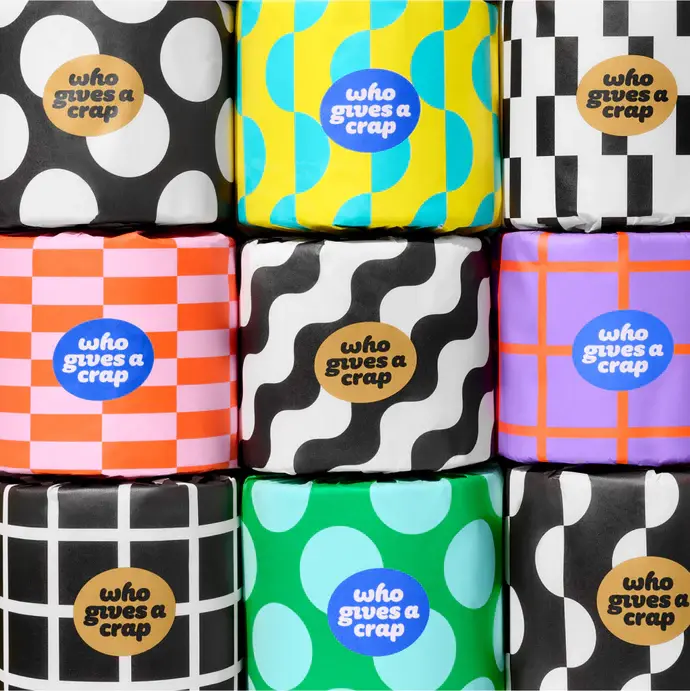
Why? Because for consumers, in many instances they buy emotionally rather than rationally. You might not think so when it comes to something inane as toilet paper, but you’d be totally wrong when it comes to a brand like ‘Who Gives a Crap’. You see what I mean? Toilet paper is such an un-sexy category of products, and it’s not to say your brand needs to be sexy. My point here is quite literally, who gives a crap about toilet paper?... These guys do! They did what no other brand in their category has done and yes, they’ve injected colour, nice packaging and a proper purpose you can get behind in terms of their whole business model geared towards a charitable cause (look ‘em up to find out more). But they’ve done so with the addition of an actual brand personality to help them really stand out, attract buyers and cut through the clutter. Especially the dominance that a multi-national brand like Kleenex has. To identify with people and connect with them on a more personal level. A human level that most faceless corporations are void of.

This is why brands need to put more emphasis on their identity that goes well beyond a logo and how they look. To be a little more ambitious and less afraid to stand out and offer a bit of personality, so as not to sacrifice personality for professionalism.
When to be professional
Any industry. Pick ANY profession, service, product or person. I’m convinced you could make it funny. You could make it irreverent. You could at the very least make it sound like a human actually put in the effort to write or say something with a bit of clever clogs intellect (rather than AI) to compel someone to sit up, pay attention, connect with that brand and choose them over another, even if that other option was better on paper.
Whether it’s a funeral service. A doctor’s office or hospital. A lawyer. An electrician. Or even a government service. All of these can and should have a level of personality that gives people confidence or level of interest, just to form a level of Consideration, which is that next step of the metaphorical conversion funnel after Awareness.
Now when consumers are considering your business, this is where you can get a little more serious, a lot more serious, or still keep the personality charm offensive if that is appropriate and what your brand is inherently. And that’s the key word, appropriate. Because like any good comedian, timing is everything, and many of the great comedians also know when it’s time to be serious and not joke around.
What I’ve come to understand from working with a whole bunch of different businesses and people around the world though, is that many of them, especially those in service based businesses, want to be seen first and foremost as professionals.
Ladies and gentlemen, professionalism is table stakes in business. It’s what every business should have a level of if they want to stay in business. Because if they’re not, they’re not taking their business seriously. While behind the curtain it’s a dumpster fire of made up chaos. Any good business owner strives to be great at what they do to serve their customers.
And yet I go into strategy meetings with clients and we get to an exercise where I ask them to rattle off some adjectives for how they want to be thought of and what they value. I reckon 8/10 will mention words like dependability, respect, integrity, competence and professionalism. Should all businesses not be this? It’s table stakes and every other business has this as a baseline.
Yes, there are times and places where overly attention grabbing personality can be turned down a notch. But you can still show dependability, respect, integrity, competence and professionalism more literally in the personality you convey at that Awareness level AND Consideration level of your efforts to convert.
The brands that demonstrate this the best are often sporting teams. The ones that show up with integrity, competence and respect for their opponents and their fans, are the ones that people are proud to support through thick and thin, even if they never make it off the bottom of the leaderboard. Because they might not be the best team, but they put on a show to value their fans. They own their mistakes and try to be better for the next game. Of course sporting teams don’t show up with wit and grandeur to show personality. Most show it through grit, determination, passion and excitement. It’s what gets people talking and gets them fired up. It’s what drives people to want to be a part of their team, buy their jerseys, go to their games, support their wins and their losses. That’s personality, yeah? That’s something many brands could learn from.
So if you currently have a preconceived idea that professionalism means serious, direct, facts figures and check boxes, no funny business, no bullshit (whatever that actually means), suit and tie wearing el’stiffo business services or product offerings that are all business and no funny business. Then to be frank, that’s what I call a ‘bland’ not a brand. Don’t sacrifice that preconceived notion of professionalism for lack of a personality that goes beyond what is table stakes professionalism every other business has as a baseline. Because that’s what customers expect at minimum, so it’s up to you to show a bit of razzle dazzle (when appropriate) to get them on your team.
Don’t be offensive
I feel like I could safely bet that many people will consider their brand personality to the extreme level of risk without being realistic. As if they were Ricky Gervais putting out a billboard like this one for Dutch Barn Vodka.

Truth is, yeah you might offend someone, but just as Ricky has said many times, “I’ve always said, just because you're offended doesn't mean you're right.”. Like I wrote earlier about online trolls, it’s themselves they have a problem with. Not you. What’s offensive to one person, is likely not to another, especially as it’s often the minority that gets offended by things.
Funnily enough, some people did get offended by that billboard, complaining to Transport for London but it was just a photo shared online made to look like a real billboard at a London Underground station wall.
The difference though is the intent, or lack thereof. Most brands aren’t going to be anywhere near as bold with their personality as Dutch Barn has with the injection of Ricky Gervais’ personality and humour. So of course you’re far less likely to cause any form of offense if you have no intention of being offensive. That said, on the off chance that you do inadvertently, it’s only as simple as acknowledging it immediately (don’t sit on it), apologise sincerely if you believe you need to and move on. That’s really all that is required.
But hey, sometimes brands want to be a little edgier and that’s great. You might ruffle feathers, cause a stir, get people talking. Be it good or bad, your brand is getting attention. It’s not to say you’re setting out to be a brand that is a total thorn of society. But you might intend on challenging the norm within society or just in your industry or category.
The thing is, you’ll still find your audience that appreciates your personality. Case in point, these ‘controversial ads’ by Dutch Barn that some people found offensive. According to Ricky via his social media pages last month, he said, "Thanks to everyone who complained about my Dutch Barn adverts and billboards. You helped build our subscribers and increased our online sales 340% on last year. I don’t just have the best fans, I also have the most useful haters”.

Still don’t believe me? Look at certain political parties in your own country. They might be offensive to some, but to others, they fully believe in them.
But to bring it back to your business, if you stay true to the personality you want to convey to help people remember and choose you, there will always be haters. No matter if you’re the loveliest brand in the world, a bloody cheeky one, or even a divisive one…like a coriander sauce brand, yuck! Just remember that you don’t need to sacrifice personality for the sake of not causing offence. That’s like leaving off the secret sauce of a burger, it’s a little bland.
It’s not about being funny, or clever
Finally, it’s not about being funny, witty, or clever. Personality can be about showing you actually giving a shit about your customer. Demonstrating you understand them. You can be open, honest, and get down on their level. Even tell them what their competition isn’t willing to. Saying it and spraying it with your own breed of character, voice and personality.
Because people appreciate a bit of authenticity, especially over humour. Humour gets a laugh, but a story and a message that connects in other ways emotionally are just as powerful. Most will even find clarity over cleverness much easier to understand.
But the big one is, most people find it hard to be funny, let alone trying to. Hell, I know I do. I know it’s not my schtick after trying. Because forcing it when it’s just not your thing isn’t worth it, even though many think this is what’s meant by having an engaging personality.
Instead, that saying “just say what you mean and mean what you say” holds up REALLY well. People smell bullshit from a mile away and if you’re showing up to promote an offer, especially with a funny or clever line to compliment it that you’re not 100% confident in, how can you expect an audience of people to be? All that’s needed is to make it clear what you’re offering in your own style of voice that doesn’t confuse the message.
This is where the prerequisite for an engaging personality is not being funny or overly clever, especially with your wording of messaging. And hey, you also might not be crash hot at writing either, but this is why we have brilliant copywriters in the world that you can turn to. It also doesn’t mean you need to have an engaging logo, colours, fonts, graphics or imagery that scream that personality. As it can indeed be more subtle in just what you say or write or your demeanour when engaging directly with a consumer, that communicates that personality.
Now to achieve an effective brand personality, it’s clearly not just about writing a funny or clever tagline. It’s a little deeper than that. It starts with the strategy of your brand. Based on who you’re targeting and what you want them to remember about you so that they then think of you and choose you when needed.
It’s also about who you’re up against. Like I said at the start of this, if you took away the distinct visual cues of a Wendy’s or McDonald’s within their in-store restaurants, they could be one in the same brand. So to separate your brand from a similar competitor, like a real estate agent as a prime example, you can define a distinct voice and personality type your brand can live and breath that adds another layer of distinctiveness to differentiate your brand from another in the way you say something, and not just how that message is displayed.
A way to start might be to look at Brand Archetypes, as they define 12 distinct personality types brands can build from, that are based on the Jungen personality archetypes. However, I find this a little limiting in the complexities of how we experience and exude personalities. So instead it’s about first identifying how you communicate inherently and then comparing it to how others in your category or industry do. But also, consider a concept that can unify all your branding and marketing DNA.

Take my fictional Chapter Realty brand I’ve been using throughout previous articles. This simple idea of people starting a new chapter of their lives when they sell or move homes is the central star. Everything else revolves around a real estate agency focused on the next chapter of life, not just the transaction. From the logo looking like an open book and pitched roof, to a message of “Where your next chapter begins” or “Your new chapter starts here”. To a personality focused on welcoming people to a new chapter within that area and sending off those moving away. Take a look at most real estate agents in your area and look at their brands to see how many have any semblance of a concept that permeates to all facets of their brand, other than an individual real estate agent's own personality. There really aren’t many who do this, especially the big national franchises here in Australia.
So if you have a strategy and the basis for a collective identity for your brand, from there you have a yardstick that at least gives you a direction to work with, as you know what feels natural. But you also know what everyone else is doing, as well as what’s working and what’s not.
You might decide to amplify your inherent personality, which might come from your founder or collective team, and this helps you increase your chances of getting attention. Kind of like the difference between Clark Kent and Superman. Same guy, just dialed up or down to what people need and the situation at hand.
Or you might find that there’s a personality type gap in the market that you can fill to shake up that category or industry as a distinctly different identity to get attention and connect with.
What I’ve found best is identifying your personality based on what aligns with the rest of your identity. In terms of what you stand for and value, what your purpose is to serve certain people and maybe a greater cause that you have a mission to fulfill. If you plan to do that in a fun way, then lean into that. If it has a more passionate sentiment, lean in there. The point is, a process of strategy and identity development to create some guiding foundations of your brand is what drives the basis of your defined personality and it can be as simple as a few adjectives written down on paper that paint a simple picture of what that personality looks like. Over time it will develop further and potentially even become more natural, especially when it’s a collective personality that people in your company need to align with.
Even for me I’ve found the external brand personality I’ve developed for my own brand when I show up has taken some time to find the right groove and feel more natural as it evolves every day.
Now this of course goes hand in hand with brand messaging. As it becomes the more tangible part of demonstrating your brand’s personality. So yes, you can come up with taglines, slogans, selling and value propositions. But don’t forget, it’s also the manner in which you also show up in terms of the level of enthusiasm you have that expresses that personality and the tone in your voice as well. Which can be hard for teams to get right, but this is why we revisit our strategies periodically, and have a simple brand identity guideline that everyone in the team can understand how to use effectively.
So it’s not about being funny or clever. Or sacrificing personality for this confused idea of professionalism. You’re not attracting robots, your customers have a sense of humour, they gravitate towards an emotional connection. And with AI being injected more and more into brands making them void of that personality, I can only feel like it’s going to become easier to stand out when you put in the effort to demonstrate a real personality that not only aligns with everything you do, but appeals to those you wish to connect with and serve, simply because many will continue to gloss over this aspect of their brand development. Because it’s clear that those who do make great use of their brand personality are the ones we evidently talk about, admire, choose and keep coming back to regardless of a better offer. An effective brand personality that shows up when required is the secret sauce of better branding that gives your brand a shot at better business success.



Comments