“I only need a logo” - Why better branding needs more than a logo
Updated: Feb 10

We all know what a logo is. We all know a business needs one. It’s the first thing we likely see from a brand to know it’s that particular brand. And it’s the first thing that we all lose our minds over when a well-known brand changes their branding and their logo now looks different. But what else is involved when developing better branding, that'll have you asking for more?
That's not a brand - game
Okay here’s a game...of sorts, and you’ll know what every one of these things are, even if you might not know the particular terminology. Here’s the game:
This is not a brand ❌

This is a logo ✅
This is not a brand ❌

These are brand colours ✅
This is not a brand ❌

These are brand mascots ✅
This is not a brand ❌

This is a tagline ✅
This is not a brand ❌
This is a sonic logo ✅
This is not a brand ❌

This is signage ✅
This is not a brand ❌

This is signage again, but also typography, product photography and pricing ✅
This is not a brand ❌

These are locations or what some might define as product and placement ✅
This is not a brand ❌

This is a product/service feature ✅
This is not a brand ❌

These are the team members and the culture they work together in ✅
This is not a brand ❌

This is packaging ✅
This is not a brand ❌

These are customer experiences ✅
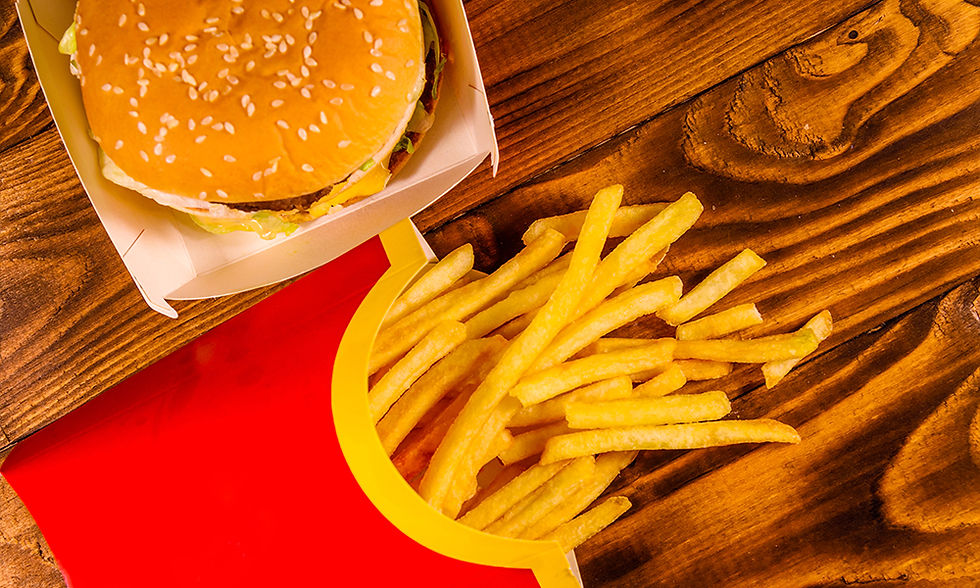
Individually each of these do not make a brand. Any brand could create their own version of each and every one of these and have customers experience them, as it’s exactly what McDonald’s competitors do, but of course, in their own way. If it were the same way, it would be the McDonald’s brand and not your local burger shop or closest franchise burger shop’s brand.
Or picture this, if McDonald's were instead an energy company and they used the same logo. The association when seeing that logo would have meaning behind it that is made by everything else the brand does to give that logo meaning when you see it. To not just know that it's an energy company, but if it's the energy company we positively associate with as a customer, that have given us a reason to want to choose them over the other options in the market.
So we can say that a brand is a collection of things not just one thing alone, yeah? It’s one big collection of every touchpoint and experience that a company delivers in addition to the product/service, smooshed together with everything a customer experiences, recalls and recognises to form a unique association between the company and the customer that can have a compounding effect over time.
The simple tale sign to know if this is working well? If you take away the logo, can we still recognise the brand? (As I demonstrate in this video)
What is a brand?
A few years ago I stood in front of my whiteboard to define this in simple terms what a brand is, and I kept it really simple...
"A brand is a captivating moment of connection"
As a brand custodian (business owner and team that represent the brand) we have the ability to create this moment in time where a customer will notice our brand in what they see, hear, feel and smell what we've intentionally done to preserve a moment that captivates their attention to know it’s us. As a result this breeds a connection point between us and our customers. So that they not only know it’s us and not a competitor, but it’s also a connection point of being able to remember us, recall us and recognise us in the future, based on that captivating moment. You could say our brand is the conduit between our company and customers.
That first (or lasting) impression or experience they've had, good or bad, influences their decision to try us, buy from us, come back again, tell others about us… or maybe steer clear of us if we’re just not for them. And this is a big point. Our brands aren’t made for all. They’re intentionally made to attract certain customers, at certain points in time, with certain needs or wants.
This is why I then went on to define branding, as an extension of what a brand is and how to develop it...
"Branding is developing captivating moments of connection, from clarity, over time"
Nothing to do with just a logo alone.
What this added definition means is that you’ve first got to develop far more than just your logo before a brand starts to take shape over time. To find that clarity in what the brand will be to your customers and in relation to your competition and what you’re going to do to help achieve it. Essentially, you can help define what your brand is, and you do so by defining:
What’s the need/what can solve it so we can offer a solution (Market Orientation)
Who needs it and who is most viable (Segmentation + Targeting)
What can we be remembered for to choose our offer over others (Positioning)
What defines us to express a shared identity (Internal Brand Identity/Culture)
How do we communicate (External Brand Identity: Messaging)
How do we look (External Brand Identity: Visual Identity + Touchpoints)
How do we sound (External Brand Identity: Sonic Identity)
How do we stay consistent (Brand Guidelines)
What we will offer and how will we offer it (Marketing: Product/Service + Touchpoints)
Where we will offer it (Marketing: Placement)
What will it cost for customers (Marketing: - Pricing)
How will people find out about us (Marketing: Promotion)
Who we will partner with (Brand Partnerships and Supply Chain)
Capturing what our customers do say about us (Testimonials and Case Studies)
Now this is in slight contrast to what other people in branding and marketing circles say. That “a brand is not what you say it is, it’s what they say it is”. Absolutely, every customer is going to shape their own memory of what your brand is to them based on their experiences. But we’ve gotta shape what that experience on our end to begin with and set out to create a net positive impression on those you believe will find what you offer to be of value to them. We need to give them something to remember us by, recognise us, ensure that we come to mind and are present when needed. An identity, touchpoints to engage with and experiences to be had that form based on what we say and do and for them form their own impression.
So I don’t quite see that definition of a brand as being entirely helpful, especially when starting a brand or you've not really dived into defining your brand properly before. At the end of the day, you’ve got a product (or service) you believe people need. You need to sell it and sell more than just a product for a customer to be confident in you and what you’re offering before buying. Even more so if you want your product to be deemed more valuable than another, especially if it's priced higher than the competition. This is the purpose of a brand. If you take away that captivating moment of connection that made it a valued choice to remember, think about and choose over others, then all you’re left with is just a product, not a brand.
However, when you interpret “a brand is what they say it is” a little differently, this is where last part of my branding definition “over time” starts to take shape.
Let's say we've first created something for people to buy into. It might resonate with those people you thought it might, or it might resonate with other people also or better and there are even more of those other people. This is where our brand will likely evolve and become something that is shaped not simply by what someone else says our brand is, but is shaped to captivate more of those other people who are also connecting with the brand.
We identify this in a brand strategy - it's our segmentation and targeting to pinpoint who is our customer and how can we grow our customer base...which in turn likely grows our brand/company. Because over time our brand evolves and likely needs to adapt to the market’s needs and wants - trends if you will. So we evolve with it, with our customers, and start to shape our brand around our customer’s experience and what they know us for. How they describe us. How they engage with what we offer. It provides insights, both qualitative and quantitatively. Giving us the guidance for when and where we can bend our brand and our offer to meet that changing need, or expand our brand to meet a growing need.
We see McDonald’s do this all the time. They’ve adapted their brand to a change of customer needs, wants, expectations and experiences. Even geographically they present their brand a little differently. In European countries like France, McDonald’s uses green rather than red. In Australia, McDonald’s adopted the “Maccas” slang name that Australians call it. They have even had to let go of some of their distinctiveness in the form of their owned real estate - going from distinct stand alone restaurants in favour of more generic modern buildings that can be more easily sold off if needed to remain profitable and expand over time. And in each country the product offering and pricing is a little different to suit each market.
But what remains are the things that McDonald’s defined way back when they started and have kept consistent for decades while introducing new and distinct attributes we remember them for, recognise and choose them:
The golden arches logo
The promise of a fast and affordable food system and franchise network of restaurants
Convenient drive through, takeaway kiosks and even seating areas
Staple menu items of fries, the Big Mac and soft drinks
Mascots
The “I’m lovin’ it” tagline
Partnerships with producers and other brands like Coca-Cola
Even the opportunity for young people to make a solid start in the workforce
These are the things McDonald’s have developed and maintained with consistency globally. Sure, it’s not a brand for everyone, but it is a brand that is there for everyone who wants and needs them. They have adapted to their markets but kept in essence what makes their brand, their brand. While letting their customers define what McDonald’s means to them and what comes to mind when they see the golden arches, or smell fried chips when they walk past a store, or hear their jingle with “I’m lovin’ it” at the end of an ad.
Now say what you will about a brand like McDonald’s but for brands that have reached this level of global awareness, it’s success like this that we can all learn from, even when starting out as a small business. Because as a small business, we’re no different when it comes to our ability of achieving better branding for better business success and the great part is that we don’t need to be a multi-billion dollar business to be what customers perceive as a ‘big brand’.
All we need to do is better branding.
Develop our Brand Strategy to give us a better direction. Develop our Brand Identity to define our internal culture, personality, look, sound and feel. Create our brand touchpoints, like packaging, signage, websites, store/office decor. Develop a consistent and beneficial product/service experience. Have a marketing plan that helps define your product, where it’s placed, how it’s priced and how it’s promoted.

These are the things that every business can and should do to create captivating moments of connection. A brand. One that is the conduit between your company and your customer. Done with clarity and done over time. That impact is compounding and amounts to a perceived 'big' brand because it is ever present and available to your customers - I've explained this in an another video here.
Because creating this brand is why customers choose one brand over another, especially when there are five of the same types of offerings available to them. And it's what I see every successful and brand does to help them achieve better business success on a global scale and even in the smallest of markets like the town I live in.
We choose the ALDI school shoes because they are the most affordable for me with 3 kids. Or ,we choose Clarks’ school shoes because they better support my kids feet and last a bit longer.
We choose the bottle of wine on the menu or on the shelf that is the second cheapest. Or, we choose the expensive Dom Pérignon Champagne because it has such a renowned reputation for its quality that we’d like to have it compliment the occasion of our meal.
We choose this dentist because they helped me overcome my fear of going to the dentist. Or, we choose this dentist because they remember our family history.
We choose this real estate agent because they sponsor our kid’s soccer team and collect Christmas gifts for less fortunate families, helping our community thrive. Or we choose this real estate because their signs stand out the most and we think that will help sell our property.
We choose this cafe because they have such nice decor even though their coffee is more expensive. Or we choose this cafe because they are the closest, they've got to know us and have a consistently bright personality when they engage with us.
We choose the white Nike t-shirt because we want to be seen wearing a brand we like and are happy to pay $50 more for it to have their logo on it. Or, we choose the plain $5 one from Target because you can only keep a white shirt white for so long.
We choose the Hermes Birkin bag because it is hand crafted, there is a long wait time of exclusivity to get on and it is a statement piece for us to have a sense of attainable luxury in our life. Or, we chose this originally unknown handbag brand because they use recycled materials and advocate against animal cruelty.
We choose McDonald’s because it brings back memories of family holiday road trips we had as kids with our family. Or, we choose McDonald’s because I can’t be bothered to cook tonight.
A logo alone is table stakes
So yes, a logo is needed, but that’s just table stakes for how we recognise and find a brand, like a name badge on your shirt to know your name. A logo becomes far more effective when it helps a customer recognise and recall your brand for everything else it does to create the associations and experiences. We can do so much more when we develop captivating moments of connection that customers walk away with, to then think of and find the brand when needed.
If we don’t have that, we don’t have a brand. We just have a product, a logo and a price that is as effective as a holding up a sign that says “BUY THIS THING FROM ME, IT COSTS THIS MUCH”.
Without going a little further, it leads to...
Generic logos like a dripping tap logo for a plumber that 100 other plumbers have.
Generic naming like ‘Technology Solutions Australia’ or ‘Grass Repair Ultra’.
Generic real estate 'For Sale' signage that goes unnoticed.
Generic brand promises like a fitness brand promising the same “Stronger. Faster. Better.” that others do.
Only competing with your competitors based on price if the product/service is (or near) identical.
Create meaning, a reason, a promise, a captivating moment of connection from clarity, over time. That is better branding and it creates better business success.
So my question to you is, what will you do to give your brand a shot at better branding?
And if you're not sure where to start, say g'day today to work with me.


Comments